

“Why do I feel more alone now that I’m sober?”
Because the noise is gone—and the silence feels like a scream.
In early recovery, life can feel disorientingly quiet. No more buzzing nightlife. No more evening rituals with a bottle. No more numbing soundtrack drowning out the ache. And once the alcohol is gone, that ache—the one you couldn’t quite name—starts to speak.
If you’re in this stage of early sobriety and wondering why things feel heavier instead of lighter, you’re not broken. You’re coming back to yourself. But we know how hard that is at first.
At TruHealing Cincinnati, we meet people every day who are walking through the same fog. Below are the questions we hear most often from people who are newly sober, scared, and deeply lonely—along with the answers we hope bring clarity, comfort, and connection.
“I thought getting sober would make me feel better. Why do I feel worse?”
This one catches almost everyone off guard.
In movies or social media posts, sobriety often looks like a clean before-and-after. Shaky to strong. Broken to healed. But in real life? The first chapter of sobriety often feels raw, flat, and painfully exposed.
That’s because when you remove the numbing agent, everything that’s been held down starts rising to the surface. The stress, the loneliness, the shame, the grief. Sobriety doesn’t create those feelings—it reveals them.
And that can be overwhelming. You might cry more than you expected. You might feel restless, bored, or angry. You might find yourself missing the very thing that hurt you—because at least it kept the pain quiet.
This is the emotional detox. It’s real. It’s hard. And you’re not doing it wrong just because it feels this way.
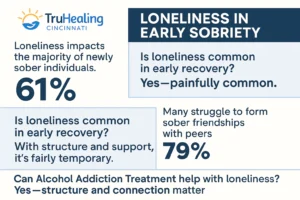
“Is loneliness common in early recovery?”
Yes. Painfully common. And rarely talked about enough.
Loneliness in early sobriety doesn’t always mean isolation in the literal sense. You could be surrounded by people—family, coworkers, even friends—and still feel like you’re behind glass. That’s because the internal shift you’re going through is enormous. You’re seeing the world differently. You’re seeing yourself differently.
Maybe you used to socialize over drinks, and now you don’t know what to do with your Friday nights. Maybe you had to put some distance between you and friends who still drink heavily. Maybe the friends you thought would be proud are keeping their distance.
That gap between who you were and who you’re becoming? It’s lonely. And necessary. But not permanent.
One of the first things many clients at TruHealing Cincinnati say is, “I don’t feel like I belong anywhere anymore.” And one of the most beautiful things we witness is how that begins to change—slowly, honestly—through connection with people on the same path.
“How long does this feeling last?”
There’s no universal answer—but it doesn’t last forever.
The early phase of sobriety—sometimes called “post-acute withdrawal”—can include waves of emotional symptoms that linger for weeks or months. Mood swings. Sleep issues. Feeling disconnected from joy or meaning. But loneliness, in particular, tends to ease once new rhythms and relationships begin to form.
That’s why structure and support are so essential. When you’re left to white-knuckle your way through this stage alone, loneliness becomes a breeding ground for self-doubt. But in a supportive environment, it becomes something else: a signal. A sign that you’re ready for new connection, not old patterns.
In our alcohol addiction treatment program here in Cincinnati, we work with clients from Lexington to Louisville and beyond to make sure they have real, steady, human relationships during this critical time. Recovery isn’t about muscling through. It’s about re-learning how to be known.
“What if I don’t have any sober friends?”
Most people don’t at first.
It’s one of the scariest parts of early recovery: realizing that your entire social world may have been centered around alcohol. Or that the people you once partied with don’t know how to relate to you now. It’s heartbreaking, even if you know sobriety is what you need.
You don’t need a dozen new best friends right away. But you do need safe places to show up and be real. That’s why treatment programs like ours include both group and individual support. That’s why we introduce clients to peers at similar stages. That’s why we hold space for awkwardness, silence, laughter, and the kind of honesty that can’t happen at a bar.
Building sober friendships isn’t about finding perfect people—it’s about finding people who don’t flinch when you tell the truth.
“Why do I still miss drinking even though I know it hurt me?”
Because drinking wasn’t just a substance—it was a system.
It was how you celebrated. How you coped. How you escaped, softened, connected. Maybe it was the only way you knew how to relax. Maybe it was tied to certain music, certain people, certain times of day. Quitting drinking means grieving more than just alcohol—it means grieving what it represented.
And grief is lonely.
So when you catch yourself missing it—even if you know it brought chaos—you’re not failing. You’re being honest. Let yourself miss the ritual. Let yourself notice the absence. Then ask yourself: What was it doing for me? What do I need instead?
That’s where healing starts—not by pretending you don’t miss it, but by finding better ways to meet the need underneath.
“How can Alcohol Addiction Treatment help with the loneliness?”
Because connection doesn’t happen by accident—it’s built.
In our Alcohol Addiction Treatment program, we don’t just focus on detox or sobriety milestones. We focus on the human side of recovery—on loneliness, identity, belonging.
Through trauma-informed therapy, community groups, skill-building, and aftercare planning, we help you rebuild connection from the inside out. That means understanding what makes you feel isolated. Naming the relationships you want to repair—or release. Practicing honesty in rooms where you won’t be judged for it.
It also means creating ongoing community beyond your time in treatment. Our alumni network includes people in all stages of recovery. You’ll meet folks who remember exactly what this stage feels like—because they lived it. And you’ll start to believe, maybe for the first time, that life sober can still be full.
“What’s one thing I can do right now to feel less alone?”
Talk to someone who won’t try to fix you.
Maybe that’s a therapist. Maybe it’s a support group. Maybe it’s one person who’s a few steps ahead in their recovery. The point isn’t to get advice—it’s to be seen.
If you’re reading this and you feel invisible, please hear this: You’re not. You’re not the only one crying in your car, or sitting on your couch wondering if this was a mistake. You’re not the only one refreshing your texts hoping someone checks in. You’re not the only one Googling “early sobriety loneliness” at midnight because you can’t sleep.
You’re just the only one in your life who knows how deep it runs.
But we know. And we’re here. Not to rush you. Not to promise it will all feel great tomorrow. But to say: this phase is part of it. And it won’t always feel like this.
You don’t have to figure this out alone.
Call (888) 643-9118 or visit TruHealing Cincinnati to learn more about our Alcohol Addiction Treatment services in Cincinnati, Ohio. Whether you’re in Lawrenceburg, Lexington, or right here in Cincinnati, we’re ready to walk with you—loneliness and all.